Understanding the Importance of Custom Conference Tables
In today’s dynamic business landscape, the workspace is evolving, and so is the furniture that supports it. Custom conference table are becoming an essential part of office design, helping to foster collaboration and innovation. These tables are not just functional pieces of furniture; they are statements of your company’s identity and values. As organizations seek to create environments that reflect their brand and culture, the importance of customization in conference tables has never been more pronounced.
Why Customization Matters for Today’s Offices
Customization allows businesses to reflect their unique identities and accommodate their specific needs. Standard conference tables can limit the types of interactions that occur in the meeting room, whereas a custom conference table can be designed to promote collaboration, creativity, and productivity. These bespoke pieces can be tailored in size, shape, and functionality to align perfectly with the demands of modern work environments.
Benefits of Tailoring Conference Tables to Business Needs
- Enhanced Collaboration: Custom designs can include features such as modular components that allow for flexible seating arrangements.
- Improved Aesthetics: Unique designs can enhance the overall look and feel of your office space, making it more inviting.
- Functionality: Options like integrated power sources and technology ports can facilitate seamless communication during meetings.
- Space Optimization: Tailored dimensions ensure that the table fits perfectly in the available space, maximizing the utility of the room.
Key Features to Look for in Custom Conference Tables
When investing in custom conference tables, consider key features that enhance both the practical and aesthetic aspects of your workplace. Look for tables that offer:
- Durable Materials: High-quality hardwoods and metal components increase longevity and robustness.
- Customizable Sizes: Ensure the table can fit various room configurations.
- Technology Integration: Built-in power outlets and data ports promote a tech-friendly environment.
- Design Flexibility: The ability to choose finishes and styles that complement your existing décor.
Materials Used in Custom Conference Table Production
Exploring Solid Hardwoods: Options and Benefits
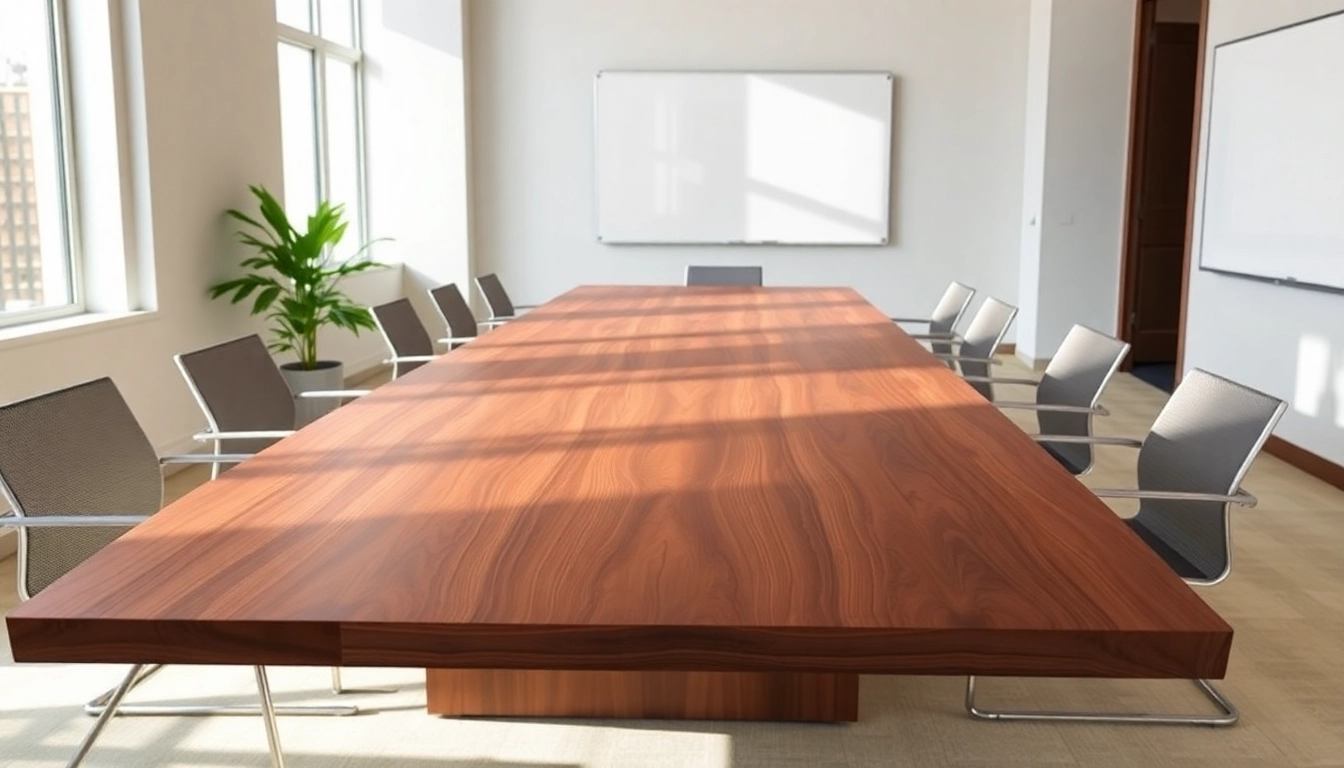
Solid hardwood is the backbone of quality conference table production. Being durable and aesthetically pleasing, options like oak, maple, walnut, and hickory provide different grains and finishes to suit diverse tastes. Each wood type offers a unique visual appeal:
- Walnut: Known for its rich, dark hues and smooth grain, walnut adds elegance to any boardroom.
- Maple: This light-colored wood is versatile and offers a clean, modern look.
- Oak: Renowned for its durability, oak is perfect for high-traffic environments.
- Hickory: The hardest of the domestically sourced woods, hickory provides strength for busy spaces.
Innovations in Eco-Friendly Materials and Finishes
As sustainability becomes a priority, many manufacturers are turning to eco-friendly materials for their furniture offerings. Reclaimed wood, which repurposes old timber, not only adds character but also helps reduce deforestation. Additionally, low-VOC finishes protect indoor air quality while maintaining the natural beauty of the wood.
The Role of Steel and Other Components in Durability
Incorporating metal components, such as steel bases or reinforcements, is crucial for durability. Steel offers significant strength and stability, helping to ensure that the custom conference table can withstand the rigors of daily use without compromising on style. Moreover, innovative designs can hide these components to maintain a sleek, refined appearance.
Designing Your Perfect Conference Table
Essential Considerations for Size and Shape
When designing a custom conference table, size and shape are paramount. Think about how the space will be used:
- Rectangular Tables: Ideal for traditional meeting styles, suitable for larger groups.
- Round Tables: Encourage equal participation and are perfect for smaller meetings.
- Modular Designs: Allow for flexibility in arrangement, accommodating different meeting formats.
How to Integrate Technology: Power Outlets and Ports
In today’s tech-savvy workplace, having a conference table designed for technology integration is crucial. Built-in power outlets and USB ports facilitate the use of devices during meetings, while cable management systems keep everything organized and out of sight, contributing to a cleaner workspace.
Choosing Finishes That Enhance Aesthetics and Functionality
Finishes play a significant role in the table’s final look and durability. Opting for stains that emphasize the natural grain of hardwood can enhance visual appeal, while protective coatings ensure longevity and resistance to scratches and spills. Consulting with experts can help you choose the finish that best reflects your business’s character while serving practical needs.
Custom Conference Tables for Various Business Environments
Tailoring Tables for Corporate Offices vs. Creative Spaces
Corporate offices often benefit from traditional, elegant designs that convey professionalism, while creative spaces may require more innovative and flexible furniture solutions. Custom conference tables can be designed to reflect these needs, incorporating elements like adjustable height features or unique artistic designs that encourage brainstorming and collaboration.
The Demand for Commercial Conference Tables in Hospitality
The hospitality sector is experiencing an increased demand for custom conference tables that can withstand high use while enhancing guest experiences. These tables often require matching seating and should be aesthetically cohesive with surrounding décor to create a welcoming atmosphere in hotels and restaurants.
Real-Life Examples of Customizable Conference Solutions
Many companies have successfully utilized custom conference tables to energize their meeting spaces. For example, a tech startup revamped its boardroom with a long, communal table equipped with integrated power ports, fostering collaboration among team members. Another company tailored its tables to include writable surfaces, allowing for dynamic brainstorming sessions to take place directly on the table.
Future Trends in Conference Table Design for 2026
The Shift Towards Collaborative Table Formats
As businesses continue to embrace collaborative work culture, the demand for tables that facilitate group discussions and teamwork is on the rise. Expect to see more designs featuring modular components and adaptable shapes that encourage interaction among team members.
Sustainability Trends Shaping Conference Furniture
Eco-consciousness will continue to shape the furniture industry. The use of sustainable materials and responsible manufacturing practices will become standard as businesses increasingly prioritize environmental stewardship. Conference tables made from reclaimed wood or sustainable sources will appeal to this growing market.
Predictions for Technology Integration in Conference Tables
In 2026, we can expect advanced technology features in conference tables, such as wireless charging capabilities or smart surfaces that can connect with devices. This trend will enhance the functionality of meeting spaces and provide seamless integration with modern technology solutions.